?
Skip to end to vote for my next build
While waiting for warm weather to give me an opportunity to put the final coat on the Seaford Skiff deck, I am making plans for the next boat. During the winter I spent some time reviving a 1960s Dyer Midget by removing everything, (the wood was all rotten), sanding and filling, painting, hardware, rivets, rub rails, and more. The Dyer project was a placeholder for the winter months. As always, there is the next boat build to consider. So, what will it be?
The criteria:
Size – If I build it in my basement shop, it needs to fit out the scuttle. That means a maximum beam of 4′ -6″. Maybe I can stretch that to 5′. The length can be up to 18′. If I build in my garage, the limit is 17′ long. If I position it diagonally, I can stretch that to 18-20′.
Trailerable – I bought a trailer for the Seaford Skiff and sized it for whichever boat I chose to build next, knowing it would be about the same size.
Weight – It will need to be relatively light as I will have to launch and retrieve it alone.
Rig – This is a big question. It has to be relatively simple. I am curious about a yawl or ketch rig but gaff, lug, sprit, or marconi is also fine. If I needed stays they would have to be easily rigged off a beach. I preferred an unstayed mast/s that I could easily remove and store in the boat.
Hull – While the Seaford Skiff was cedar strip built, I would like to try my hand at carvel (clinker) this time. It would be a good learning experience. Traditional planking will have to wait. My steaming abilities need some refinement!
Draft – Shallow. I will doing much of the sailing in and around Coecles Harbor, Shelter Island, NY where the water is quite thin. There are many gunk holes that can be explored only with a boat that draws inches. Also, I want to have the ability to beach it so a flattish bottom is good. I prefer centerboards also, but a daggerboard can work if necessary.
Plans – While it is nice to have articulate plans they are not imperative. Some kind of offsets ( a list or lines dimensioned) and lines plans are enough. A sail plan helps, as does a longitudinal cross section. But even that probably isn’t necessary. I can figure it out. Boats with sparse drawings are often older designs (usually from the late nineteenth century), more intriguing to the eye and uncommon, which I find always more interesting than newer more popular designs.
Beauty – it must be breathtaking.
The first one on my list is Little Egret recently designed by the Australian Ross Lillistone. I keep coming back to this LOA 18′ 10″ Beam 4′ 10″ boat – a cross between a Sharpie and a Dory. I am intrigued with the ketch rig, flat bottom, Sharpie heritage, and double ended design, and she has a lovely sheer. I am aware of only one that was built in Australia (click here for the blow-by-blow build). It certainly would be unique and is reputed to sail well. Also, the shallow draft Sharpie type evolved nearby. Clearly they had the region’s thin water in mind!
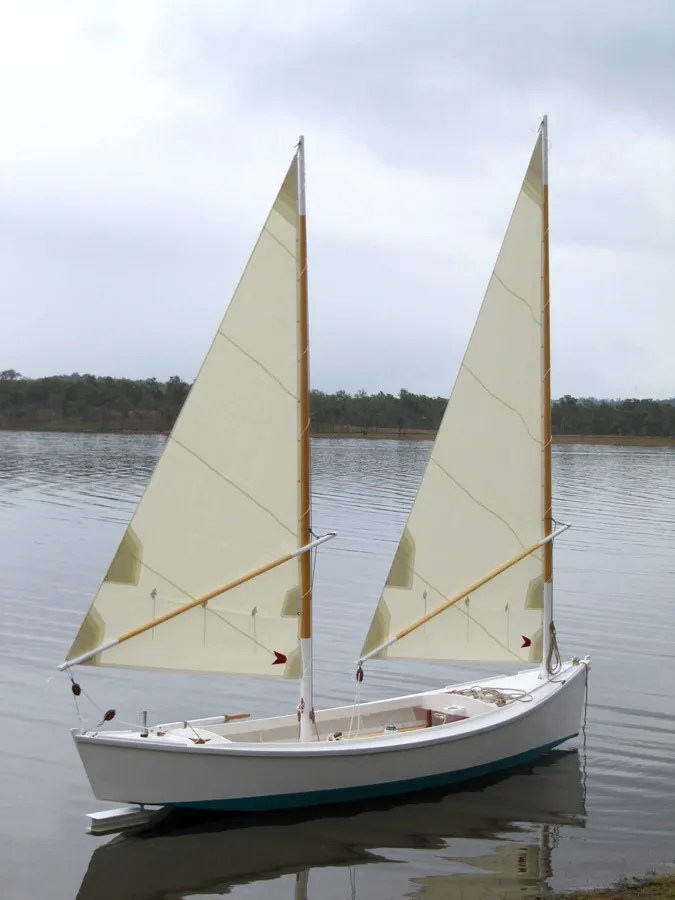
Little Egret – Ross Lillistone
Monroe’s Egret is legendary. A beautiful double-ender she was reputed to weather any storm, run sand bars at will, and carry a load to many of Florida’s remote areas accessible only by water. With a small cuddy she was shallow draft, gaff rigged, boomed ketch, with a lovely sheer and pronounced ends. Unfortunately her plans and lines have been lost. There have been numerous versions designed from notes, photos and oral histories, some quite beautiful, others modified to the designer’s preferences. While this certainly would be an exciting build and a worthwhile project, unfortunately my space limitations forced her off my list.
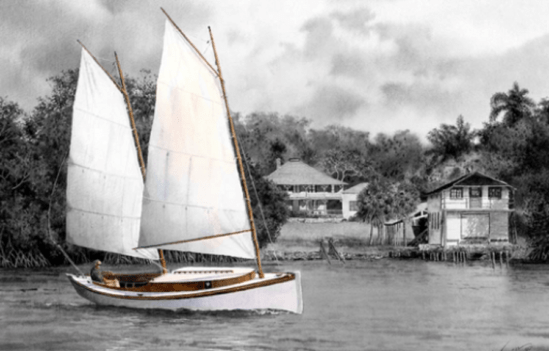
Egret – Ralf Monroe
A modified version of Mark Fitzgerald’s FLORIDAYS in Reuel B. Parker’s The Sharpie Book, this 20′ 6″ Milford 20 was built and designed by Neville Watkinson of Milford Boats in Christchurch, New Zealand. Based on the New Haven Sharpies of Connecticut, it is a lovely example of careful attention to detail. With low freeboard and shallow draft characteristic of the Sharpie type and with her rounded stern and schooner rig, she strikes an elegant pose from any angle.
I became so enamored with this design I went so far as to speak to the builder/designer for details and order the plans. While it would be at the limit of my space restrictions I was convinced I could manage it. The plans were extraordinarily complete, together with a comprehensive build manual, specifications, scantling lists, and costs. AND, she is stunningly beautiful.
I went through the plans at length, over and over, contemplating the build sequences, time, costs, and wood needs. I am still going through them!
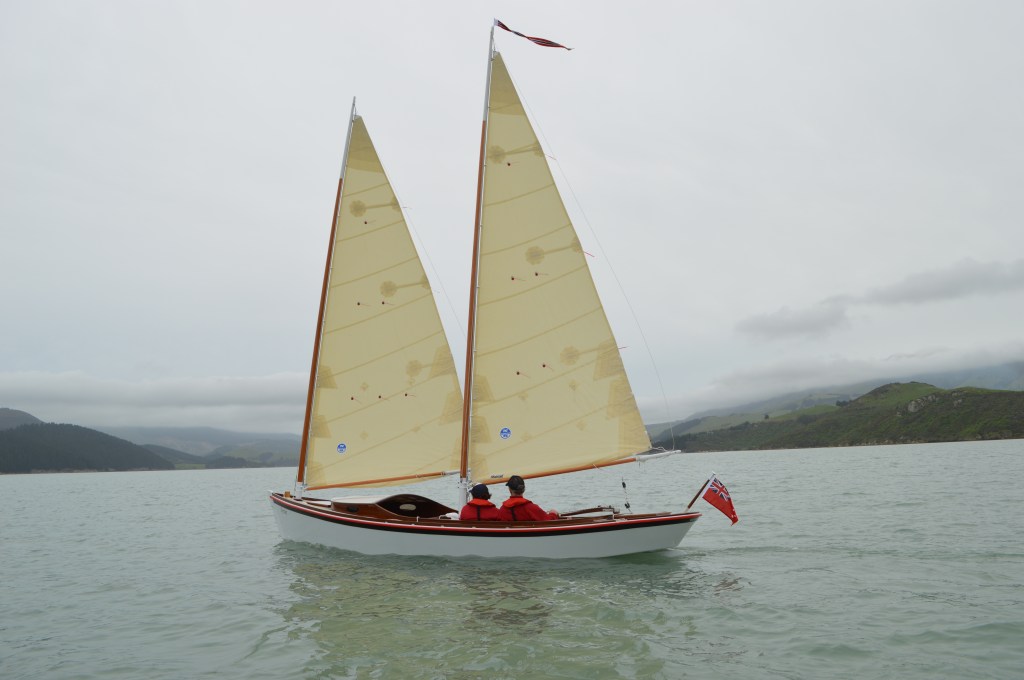
Milford 20
The N. G. Herreshoff Coquina is another legend. Perhaps his personal favorite for his own use throughout his life time, Coquina is a light, gaff ketch rigged, shallow draft, lapstrake design still being built from his drawings. The original was built in the winter of 1889, and she exudes the Herreshoff style in her lines and beauty. A centerboarder steered by hand ropes running along the inside of the hull eliminates the need for a complex tiller arrangement to avoid the mizzen. Her signature contoured varnished sheer strake and her many lapstrake planks give her an appearance of a larger boat than her 16′ 8″ LOA. She is quite light and handles like a dream. And of course, she is stunningly beautiful.
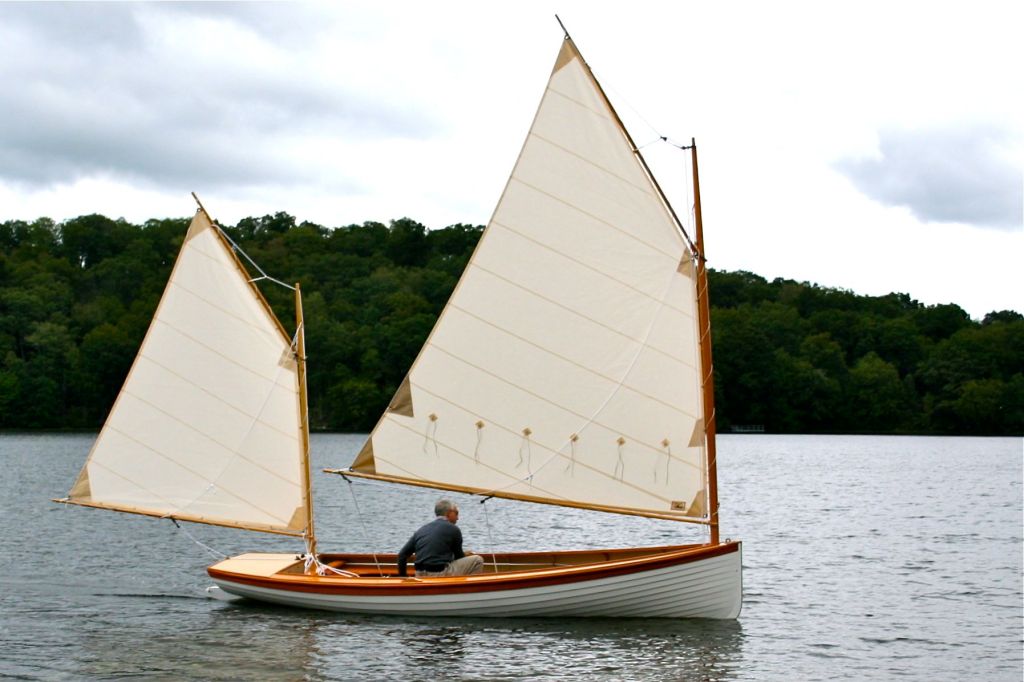
Coquina – N. G. Herreshoff
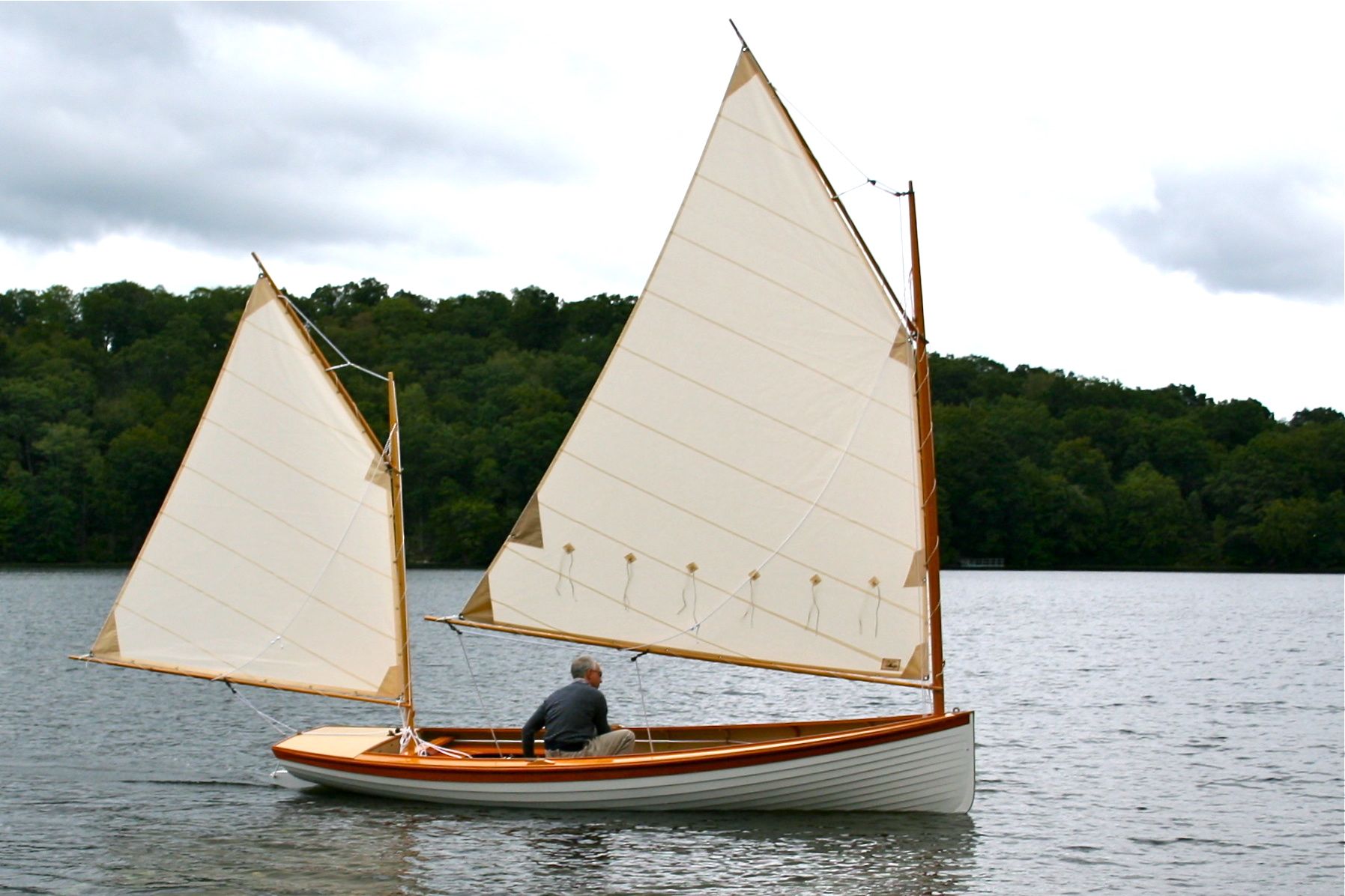
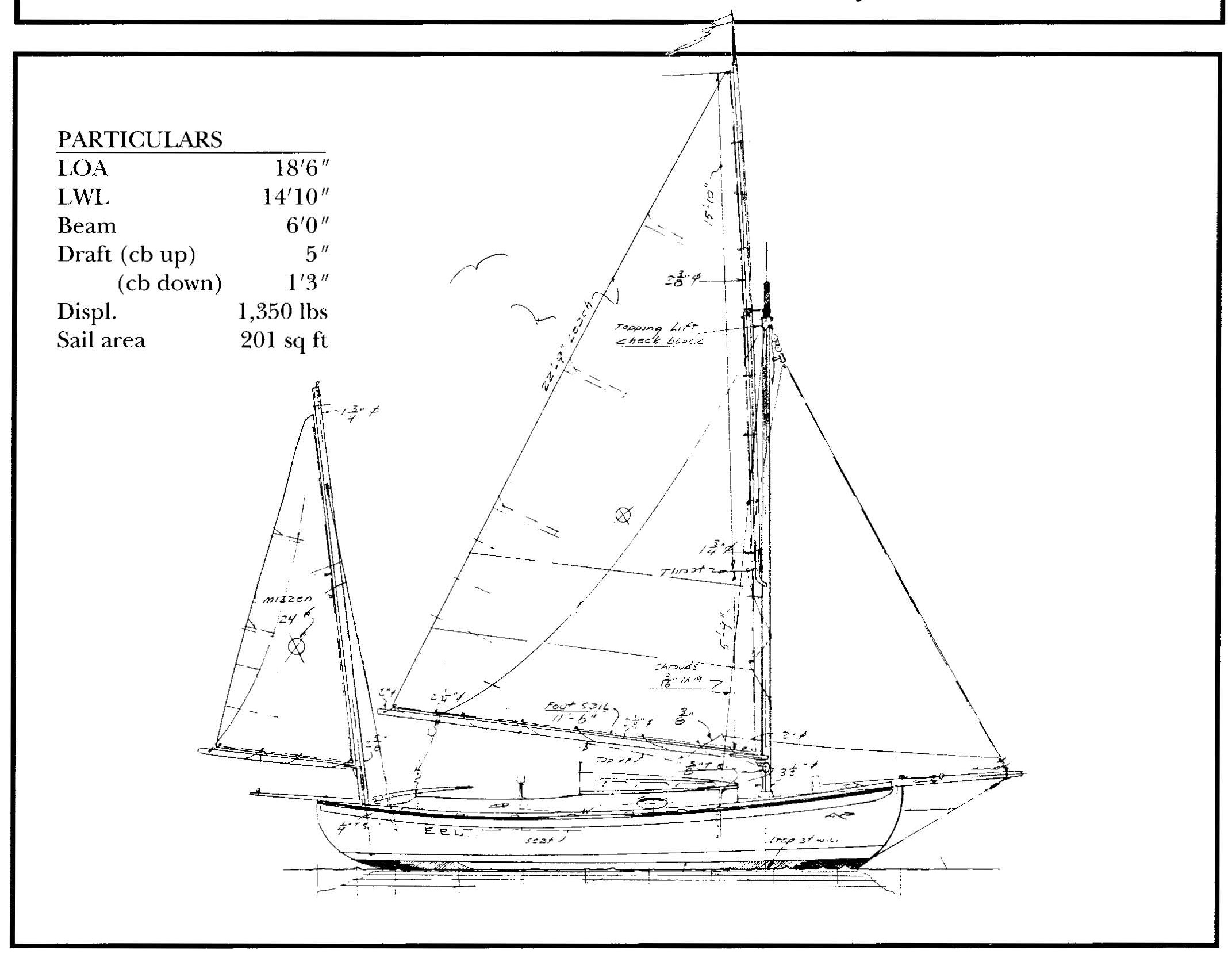
The 18′ 6″ canoe yawl by William Gardner is a more substantial boat than the others. With the possibility to outfit the cabin with a sleeping arrangement, she has more distant cruising capabilities. While her size fits my criteria and for a small cruising boat, has lovely lines and a sweet sheer, she is a larger build than I anticipate in the near future. Nonetheless she intrigues me with all she has to offer in such a small package.
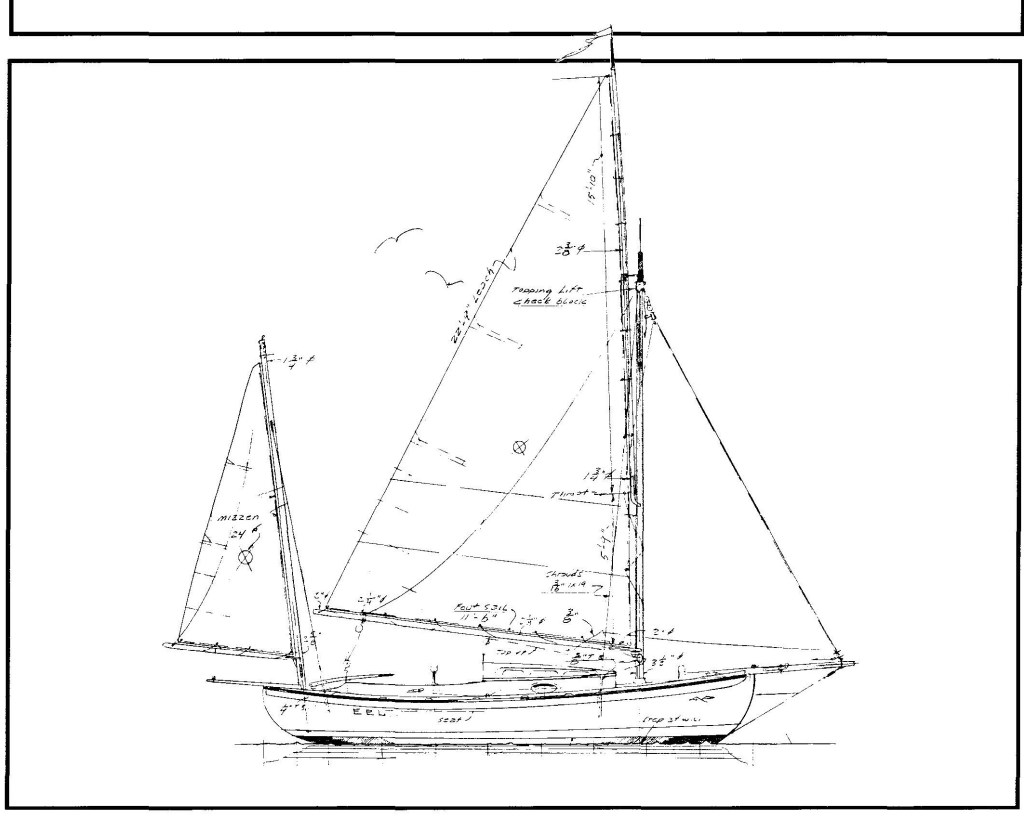
Eel – William Garden
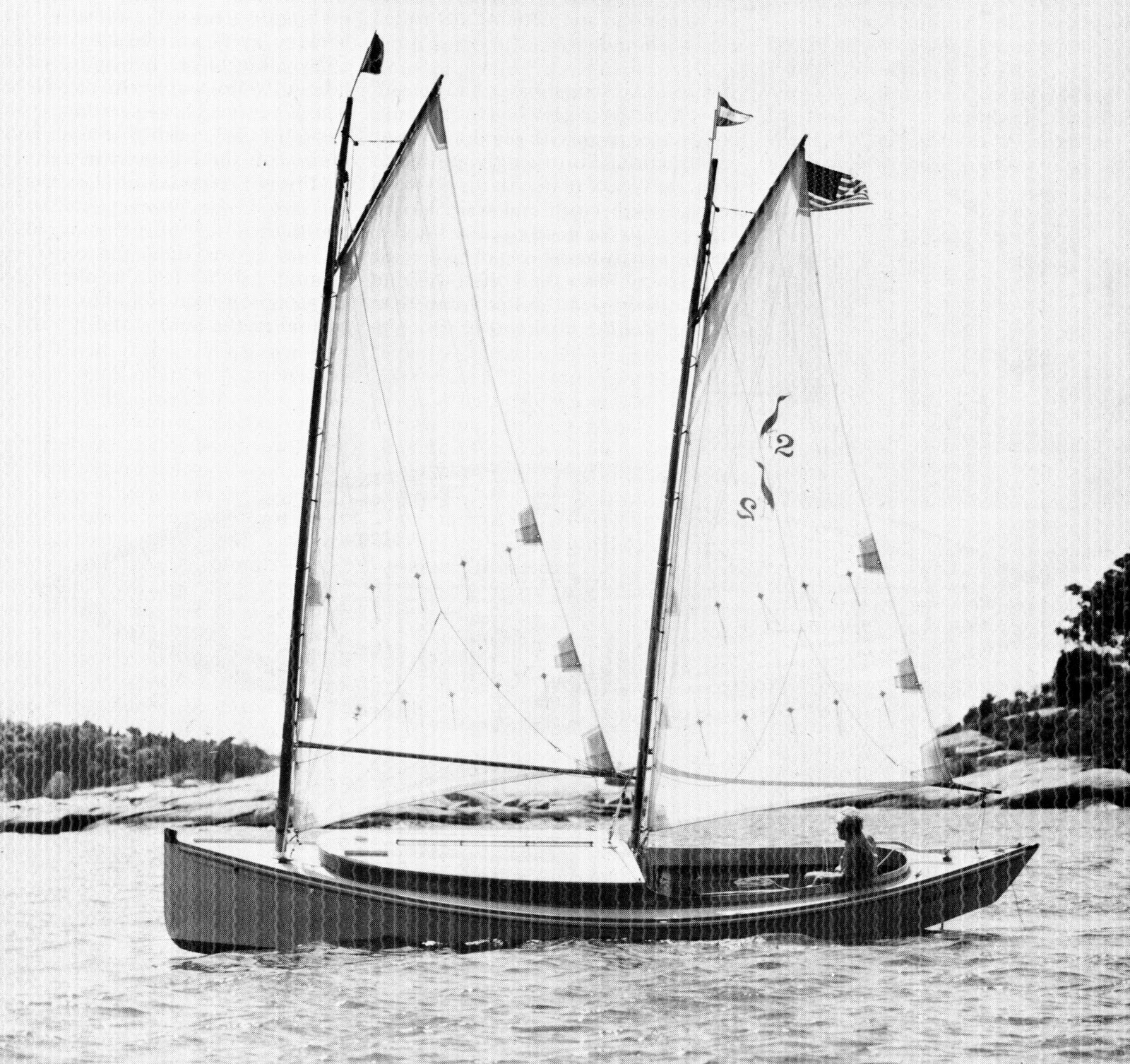
This one is a bit obscure. It is a modified Swampscott Dory designed in 1898 by Charles Mower. It was designed to race, and race fast. She is slightly beamier than a Swampscott Dory and has less freeboard. The additional beam adds more stability and with the decks and coamings keeps her well dry in challenging weather. The originally designed leg-o’-mutton main can be replaced with a taller sliding gunter rig and a kick-up rudder blade extension substituted for the original transom hung fixed rudder. The original design called for an unstayed mast but subsequent builds have added side stays to support a taller mainsail. She is lapstrake built in typical dory fashion.
Mower’s original drawings were somewhat minimal. He left a lot to the dory builders who were very familiar with recreational dory construction as they were extremely popular in the early 20th century. John Gardner published redrawn plans with additional details (primarily for rowing accommodation) for amateur boat builders in his Building Classic Small Craft, 1977. He also recommends looking at his other book, The Dory Book, 1987 for construction detailing typical of dorys.
Mower’s original plans are no longer available so the plans Gardner provides in his Building Classic Small Craft will be all I have to work with. Not really a problem as there is a complete set of offsets, dimensioned cross sections of several frames, and a good description of each component. I am liking this boat more and more. A real head turner, elegant form, fast and fairly seaworth for my area, sized to fit my available build area, she seems quite perfect.
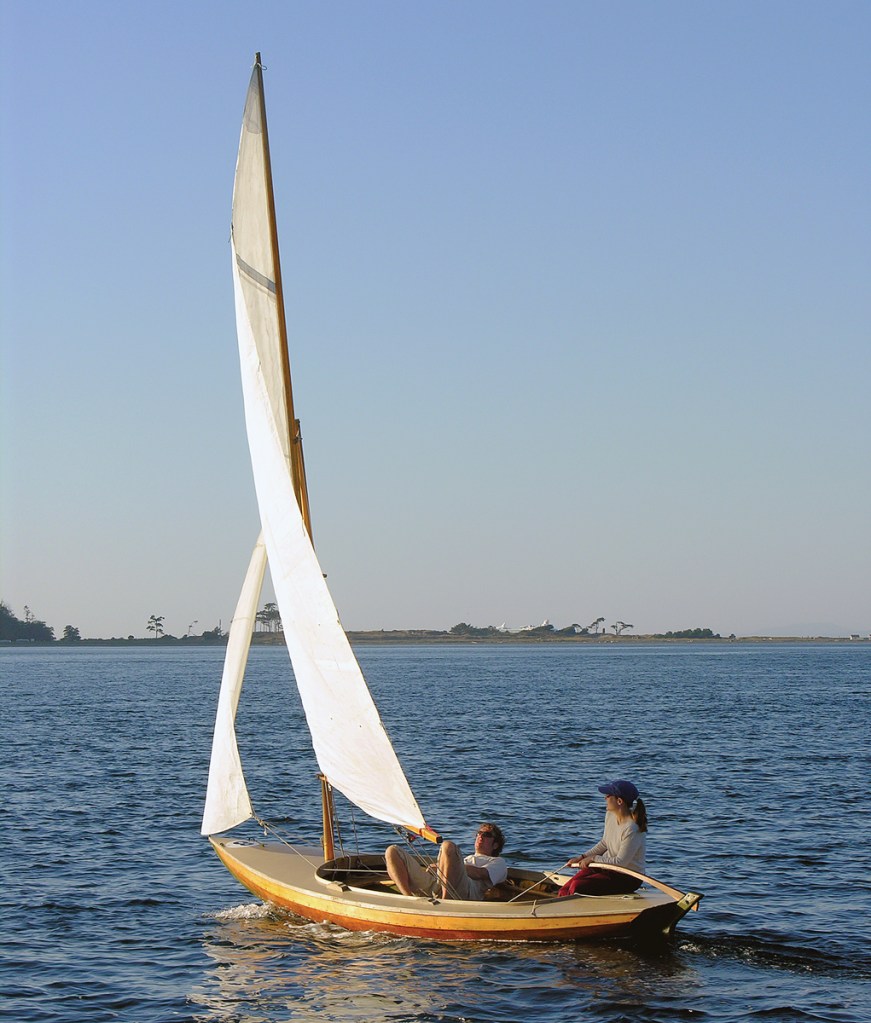
Mower Dory – Charles Mower, redrawn by John Garden
So, which will it be? I am leaning toward either Little Egret or the Mower Dory at this point. Seems like I could get one of those built in no time.
 Shelter Island Boat Works