Before flipping the boat to paint, I varnished the mahogany trim with two coats, both to protect it and provide a clean surface for masking tape. Then I rigged some tackles and flipped the boat.
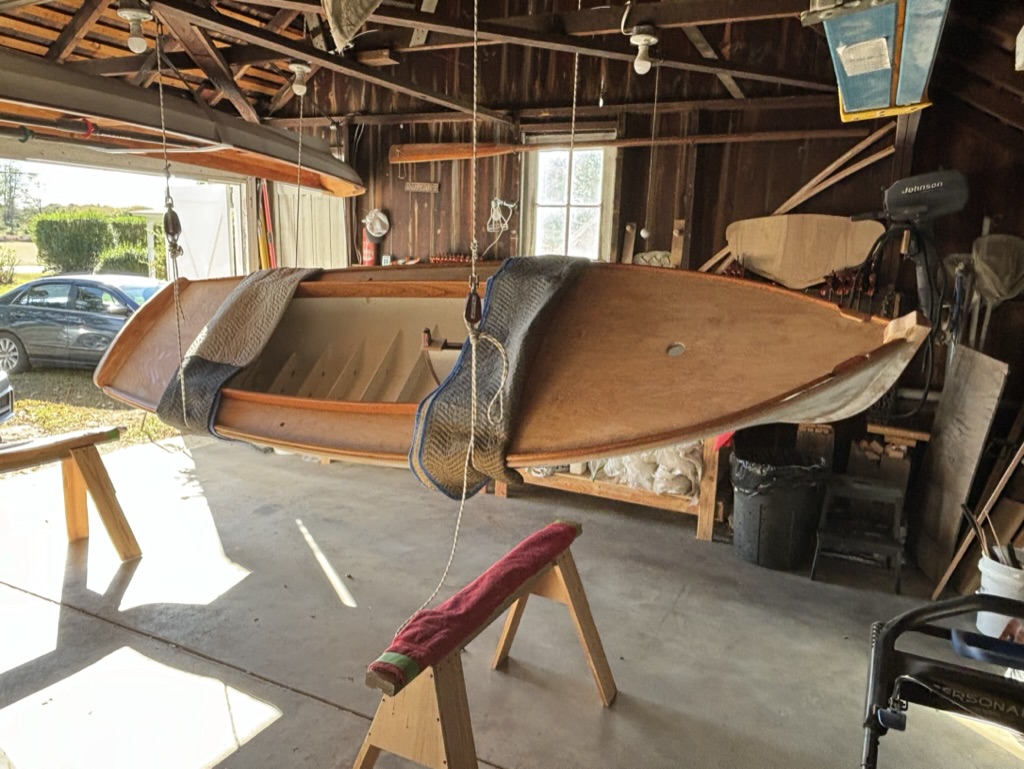
My garage is old, uninsulated, and unheated. To protect the boat from the bits and pieces of crap that inevitably drop from the ceiling and beams, I quarantined a bay with plastic sheeting. Also, the weather was getting colder and this smaller space could be heated with portable heaters.
I chose to use gloss white Interlux Brightside for the topsides. Having used it before, I found it very forgiving and durable. I masked the rub rails and applied the first coat. It covered remarkably well and as usual, flowed evenly. For me, it is always a shame to paint a transom. But, that is the way the originals were finished. I had to suppress my overriding passion for varnished yacht finishes (it was just Doug fir after all)!
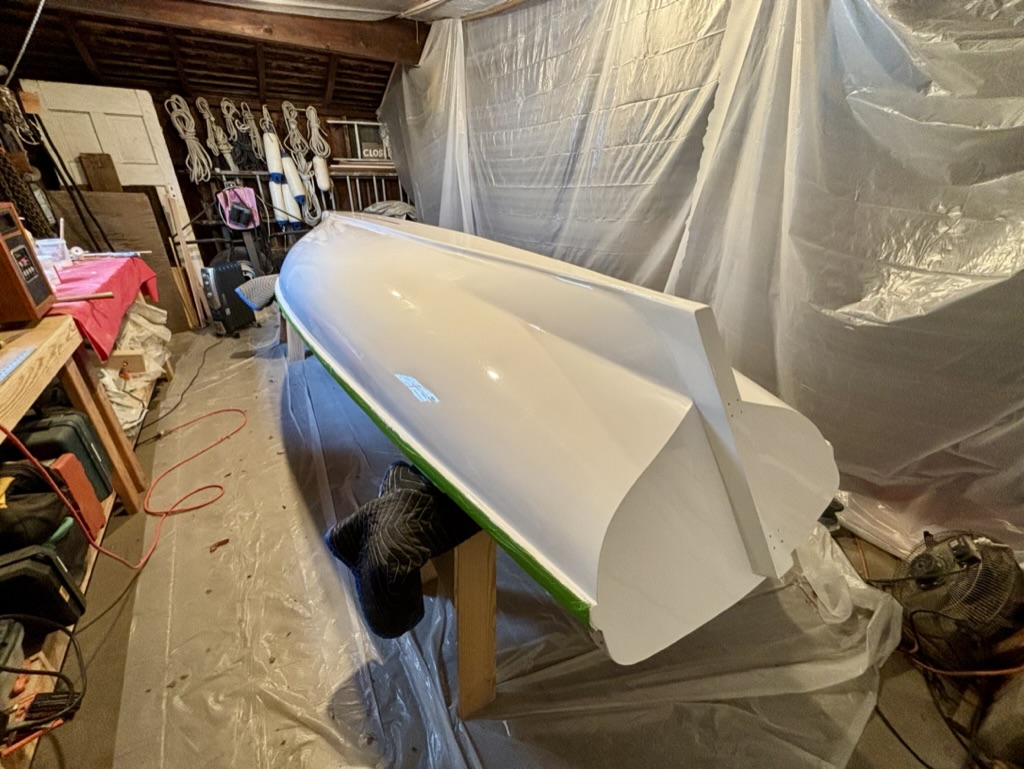
First Topside Coat
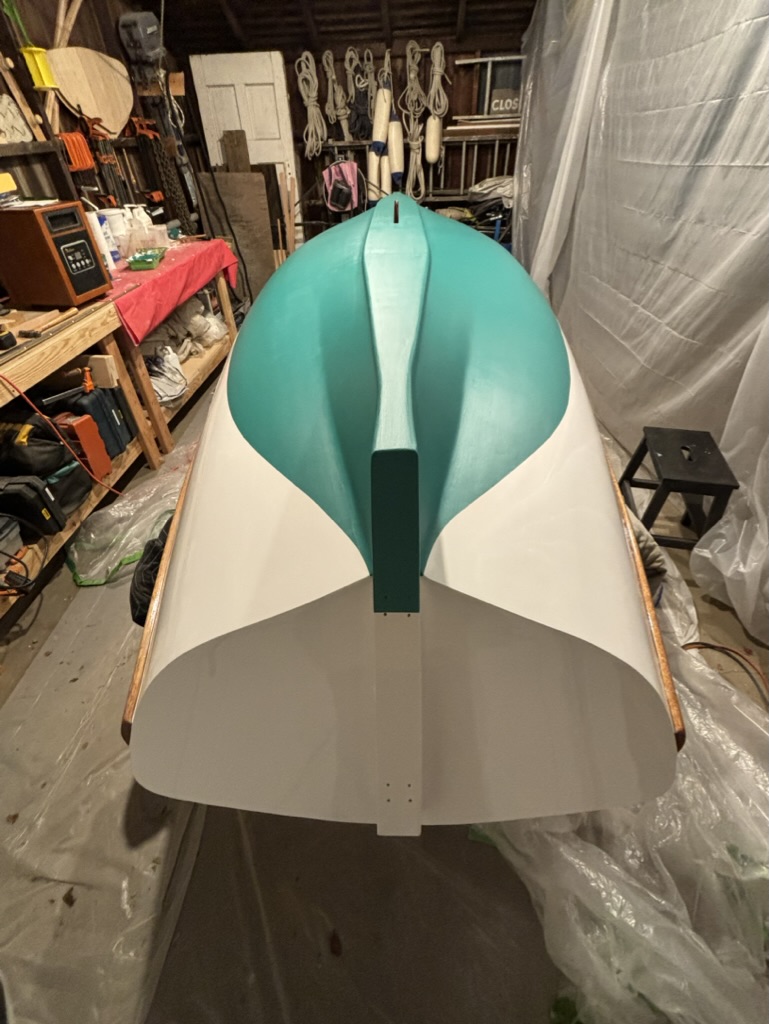
The hull needed only three coats, but I added another coat for greater protection. After drying it looked fantastic.
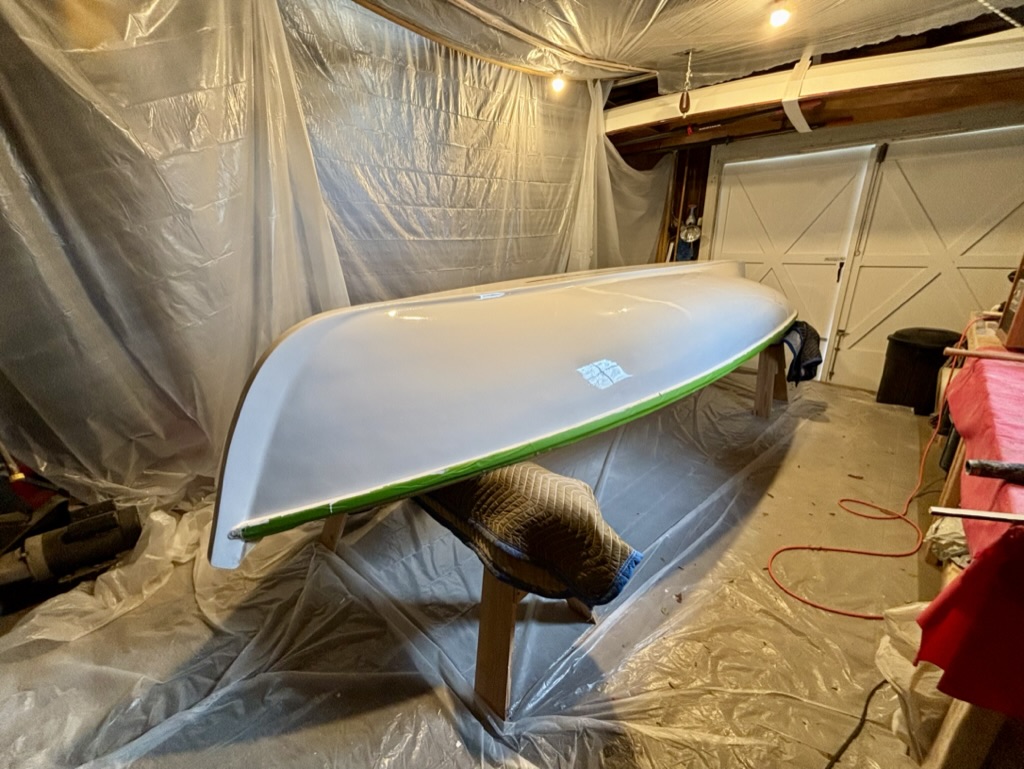
Fourth Topside Coat
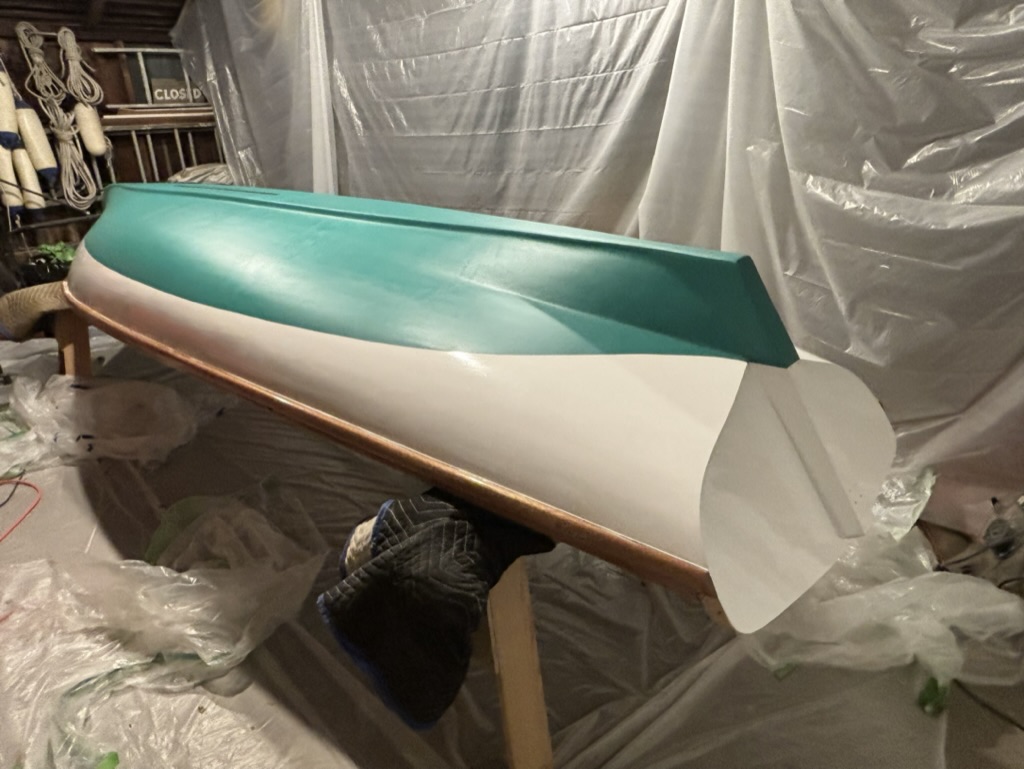
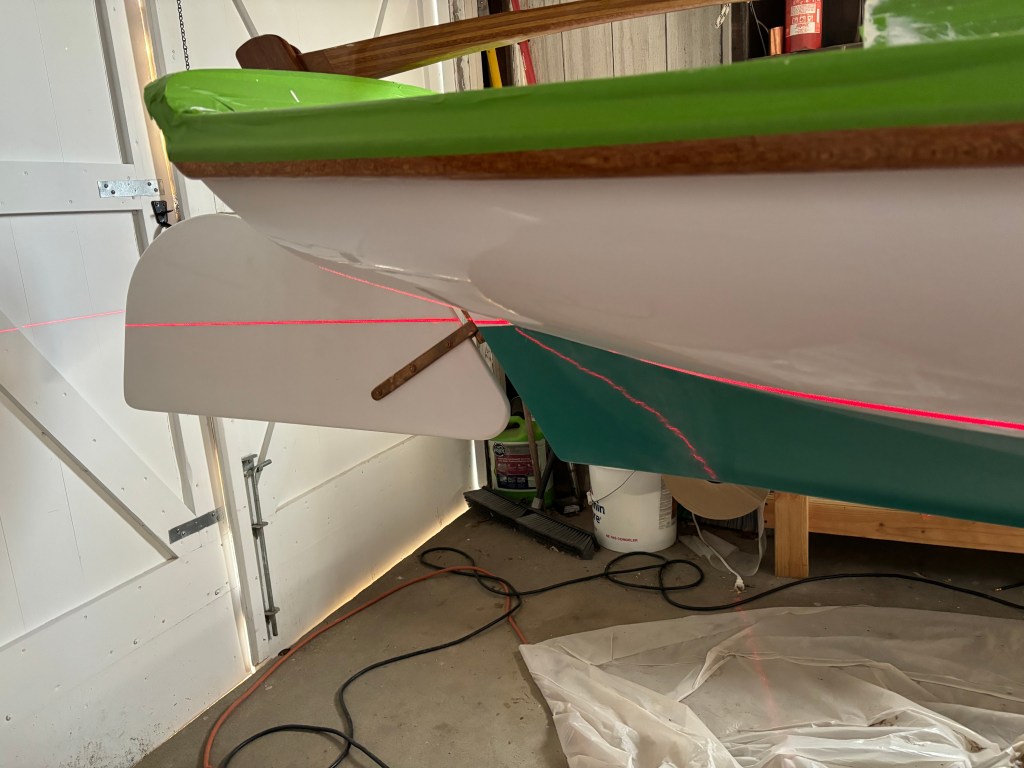
I decided to go forward with the waterline as described in the plans. After launch, if the actual waterline was off, I could always adjust it. I was curious to see if the weight balance was correct after all my alternative wood choices. I used a laser level to strike the waterline and added two or so inches above that. I swept the bow and stern up a bit (as it always helps to add emphasis to the shearline). Then I masked the hull and applied three coats of green Interlux Micron CSC bottom paint.
 Shelter Island Boat Works
Leave a comment