When I made the floors and deck structure, I cut templates of the floorboards from 1/4″ plywood, using them to align the floors to the hull shape. I resurrected them to make the final set, refining them to layout the exact shapes of the final boards.

Floorboard Templates
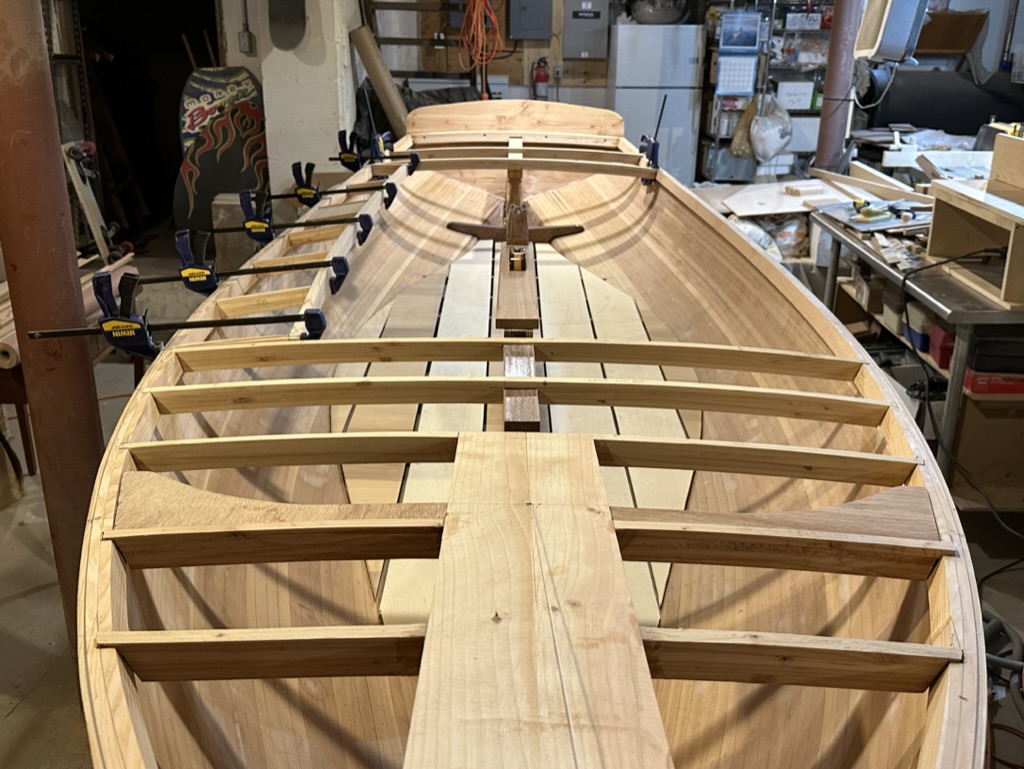
The floorboards would be oiled 1/2″ clear cedar. While at the lumber yard, sifting through planks of cedar, I thought I had found four nice clear planks that closely matched in color, grain and tone. Well, that turned out not to be the case.
When I got them home, they still looked like they matched well. I left them for some months while doing other things. When I returned to shape them, I noticed that the color had shifted. Distinct patterns of light and dark appeared on most boards, which was a bit disconcerting, as they were not cheap. Why they changed color is a mystery. I suspect they were quite green when I bought them, and as they dried out, the color differential appeared.
I decided to arrange them so the shifting patterns alternated with the adjoining planks. I convinced myself it would add some “flavor” to the bottom of the boat! I went ahead and cut them, rounded the edges, and then started the long process of applying Tung oil. I chose oil over a hard finish because I knew that, when they got dinged up, a hard finish would let in moisture, crack, and look horrible over time.

Templates and Cut Floor Boards
Tung oil is a lovely finish for wood. It has a low luster (if buffed out well) and brings out the grain and color. It also protects from moisture. It is flexible, so dings are less likely to show on the soft cedar. Exposed to the sun and weather, the oil will wear off and must be recoated periodically. If left alone the oiled cedar will eventually turn a light grey. The cedar itself is rot resistant and should last a long time. I decided to start with the Tung oil and see how things went.
The only problem: Tung oil takes forever to dry – if it ever does. And I needed to allocate twenty four hours between coats. I brushed it on, waited a bit, wiped the excess, and buffed it to a shine. Every few coats I applied the oil using steel wool, and occasionally, sanded any drips. Then I waited for a couple of months for it to harden. Yes, “a couple of months!” The idea is that it doesn’t really harden: it solidifies, but stays supple. It adheres to the wood tenaciously, but is malleable.
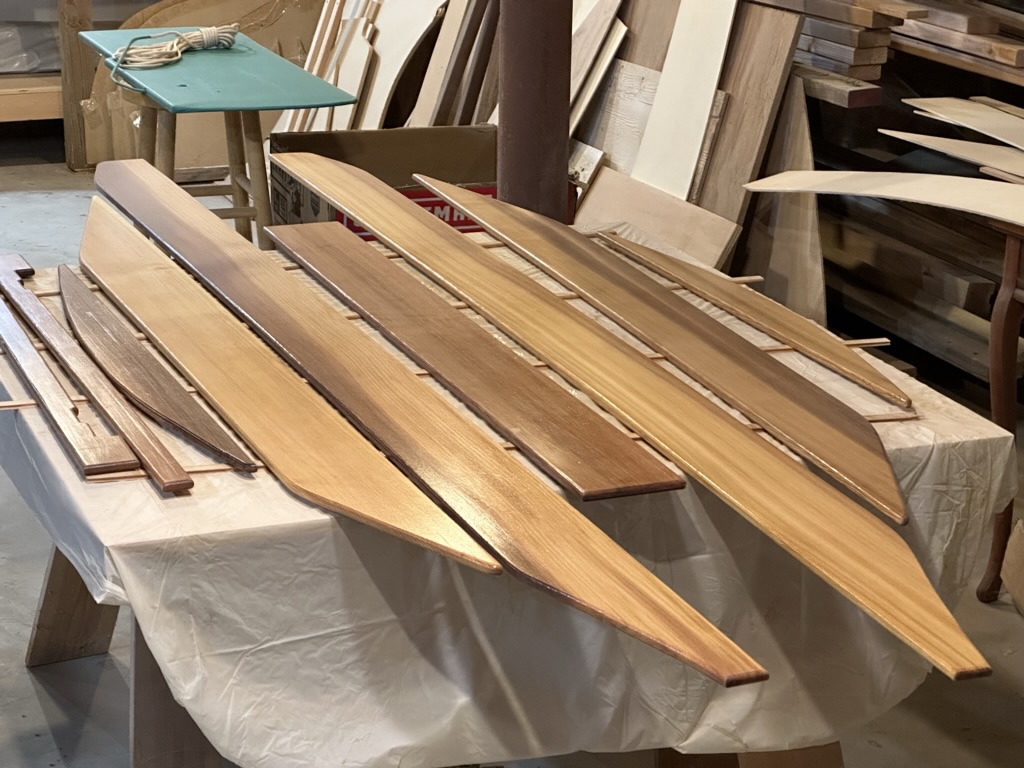
Floorboards with Tung Oil Drying
To attach the floors together I made some underside frames from fir. Well bedded bronze screws attach the boards from the underside of the frames, so there are no visible screws or entry points for water. The central single board, separate and not framed into the adjacent planks, can be lifted easily for bailing. The side planks are attached to each other and removable as a set – one port, one starboard – for maintenance. All the boards rest on the floors.
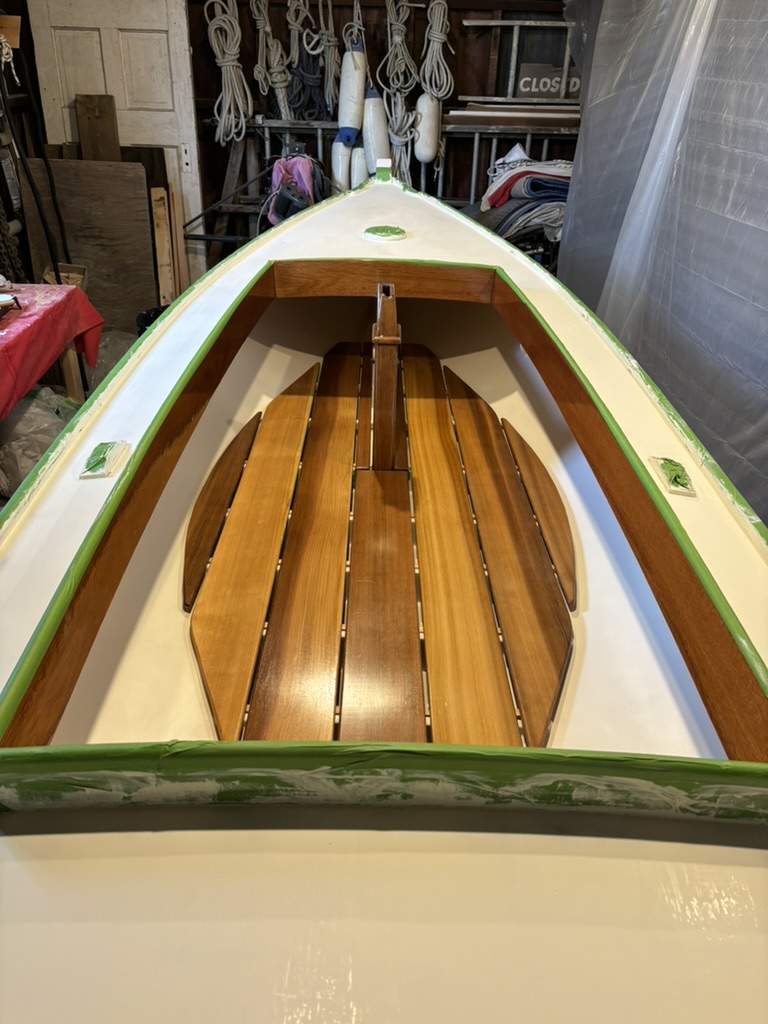
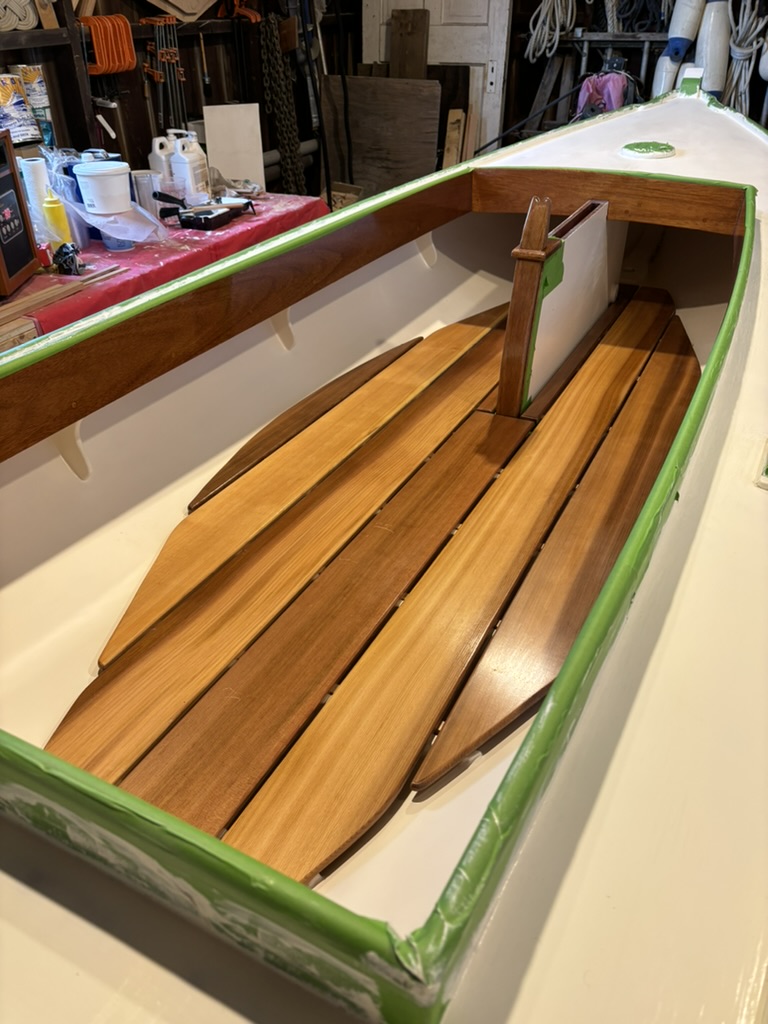
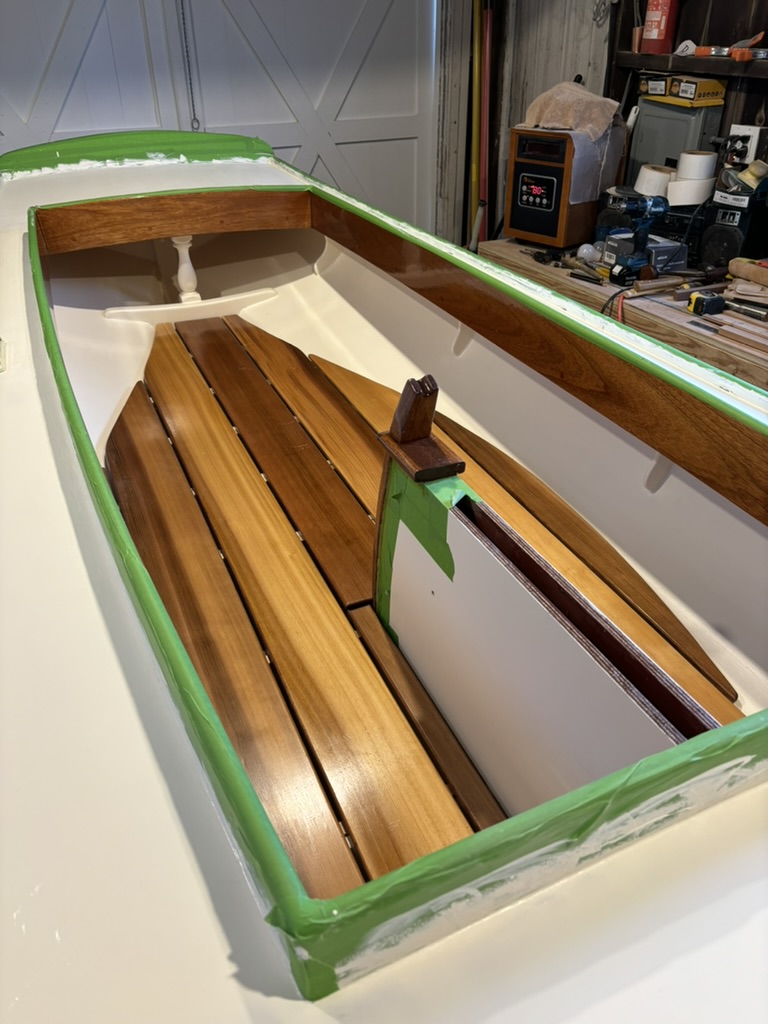
The Tung oil enriched the varying colors of the cedar beautifully. When I finally stepped back and looked at them in the boat, I forgot all about my initial shock at the multi-colored array of cedar. I confidently planned to tell everyone that it was always my intention to find patterned cedar for the floorboards. And, that it was always my plan to enhance the difference with miracle Tung oil!
 Shelter Island Boat Works
Leave a comment