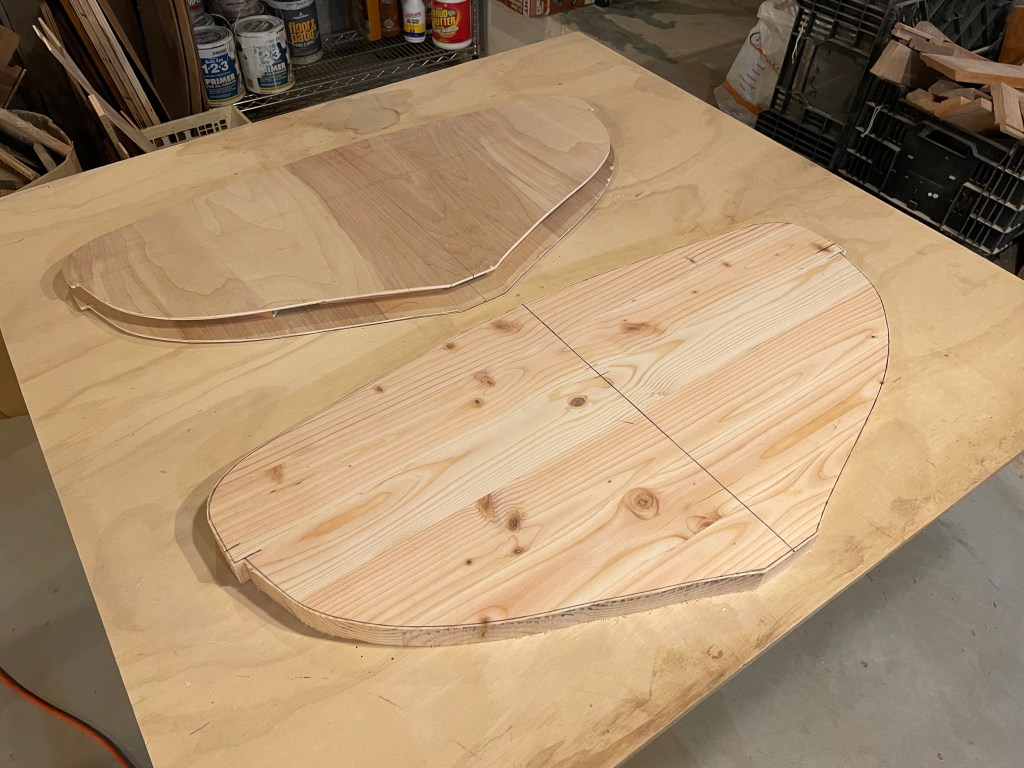
Using the offsets and gridded transom plan, I laid out the transom. I decided to build a template out of 1/4″ ply to make sure I had the bevels for the edges correct, as they were fairly severe compound curves. The rake of the transom was considerable.
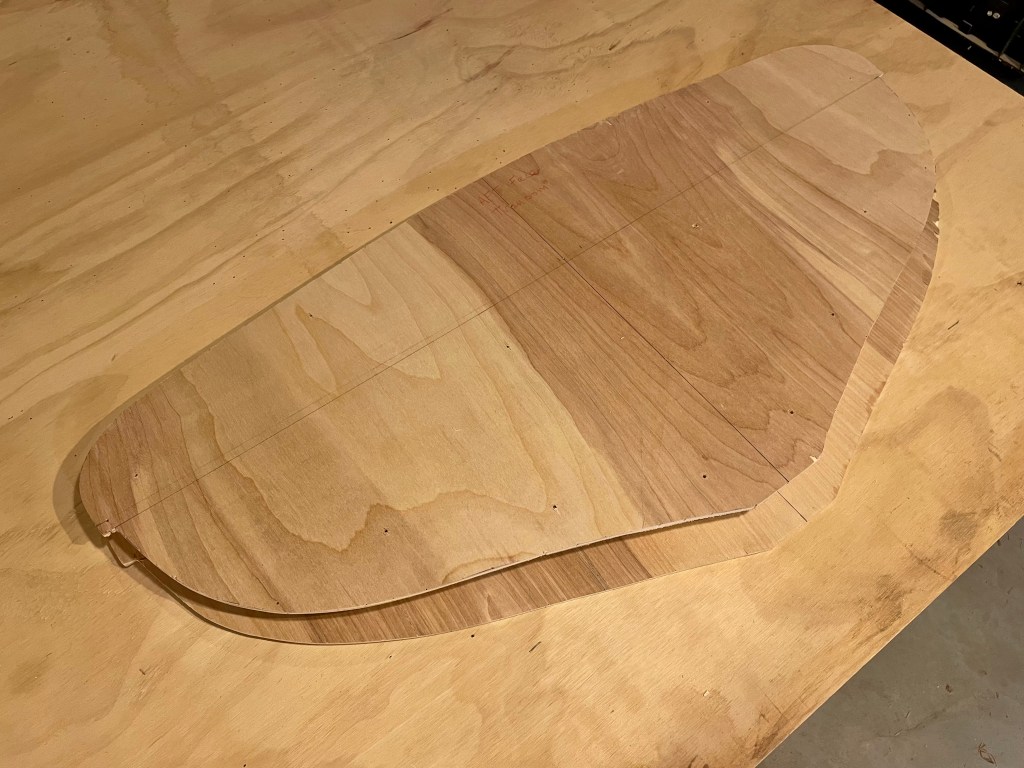
Transom Template
I decided to make the transom of Doug fir laminations, epoxied and splined. I considered mahogany, but that seemed like a waste since the transom would be painted like the 1870s originals. No varnish to be seen anywhere on the boat. Painting mahogany breaks my heart. But then varnishing is not my passion either. So painted it will be.
The transom would be glassed and plenty strong. Also, using Doug fir throughout as a stand-in for what would have been White oak in the originals would keep the boat balanced on her lines as the weight and density would be consistent. It also would relieve some weight in the ends, a desired benefit.
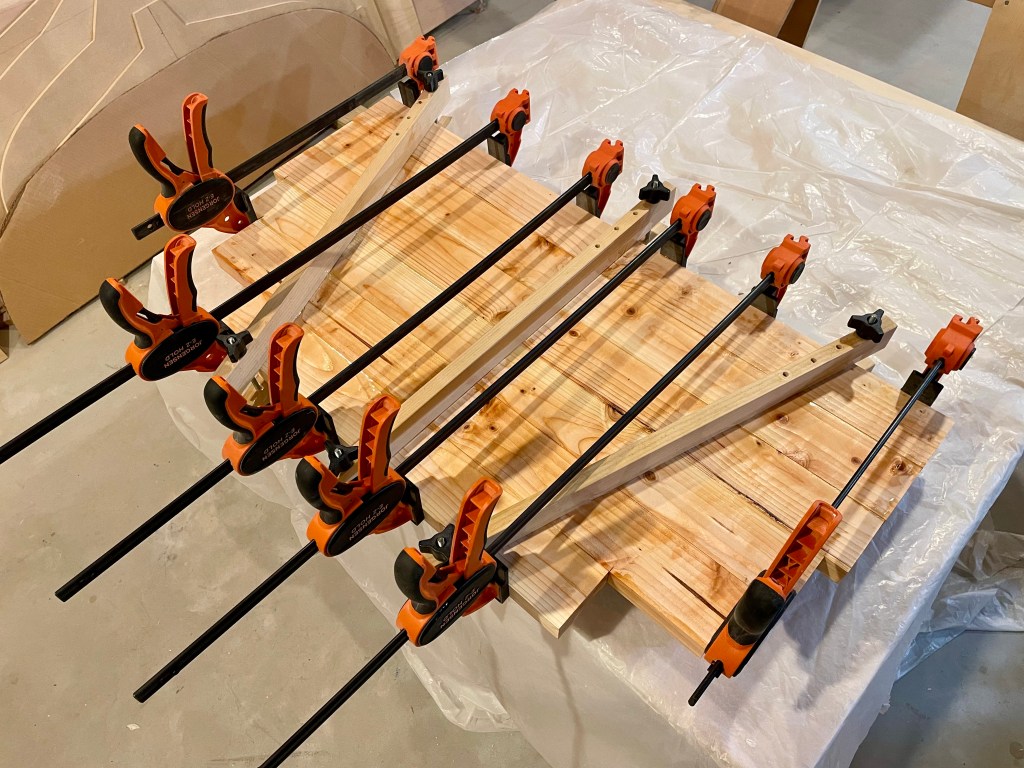
Transom Glue Up
Conveniently, some-well dried Doug fir had had been sitting in my wood pile for some time. I used that as I thought it would be more stable and thus avoid any warpage that might occur. Unfortunately, it had a lot of knots, but as it would be filled and painted, I was not so worried.
The stern post is an unusual feature of the Seaford Skiff. Usually inboard, this one sat on the outboard face. Using the same dry fir, it was an easy glue up.
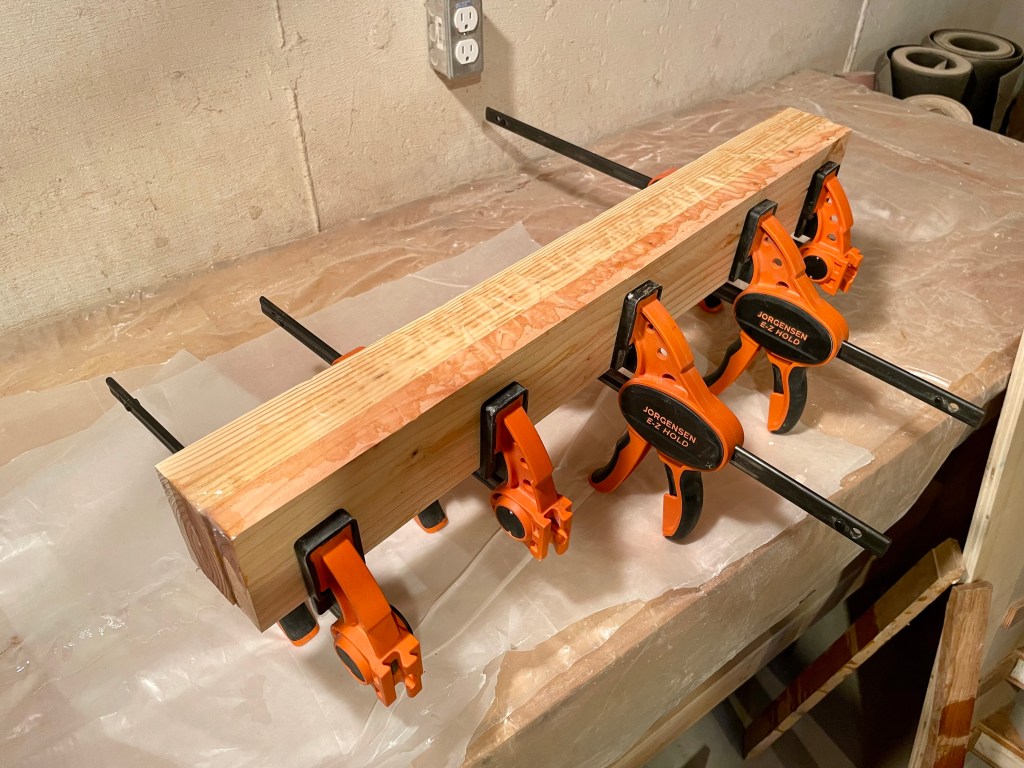
Stern Post
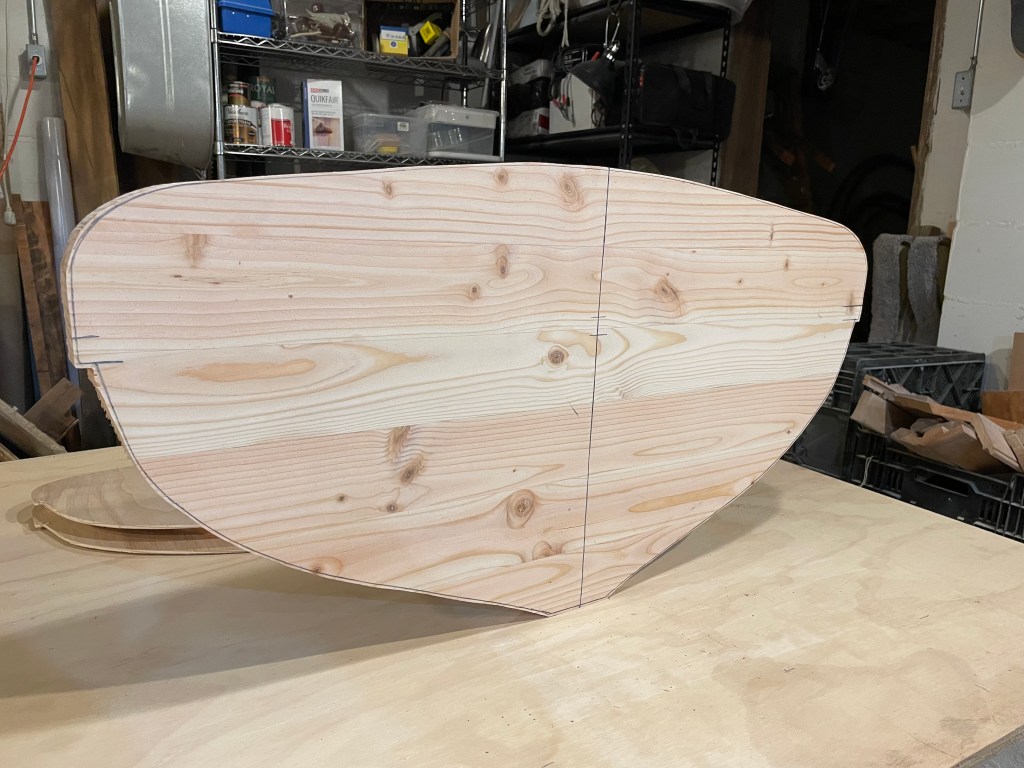
The transom blank with tapering marks to be completed before planking.
 Shelter Island Boat Works
Leave a comment